
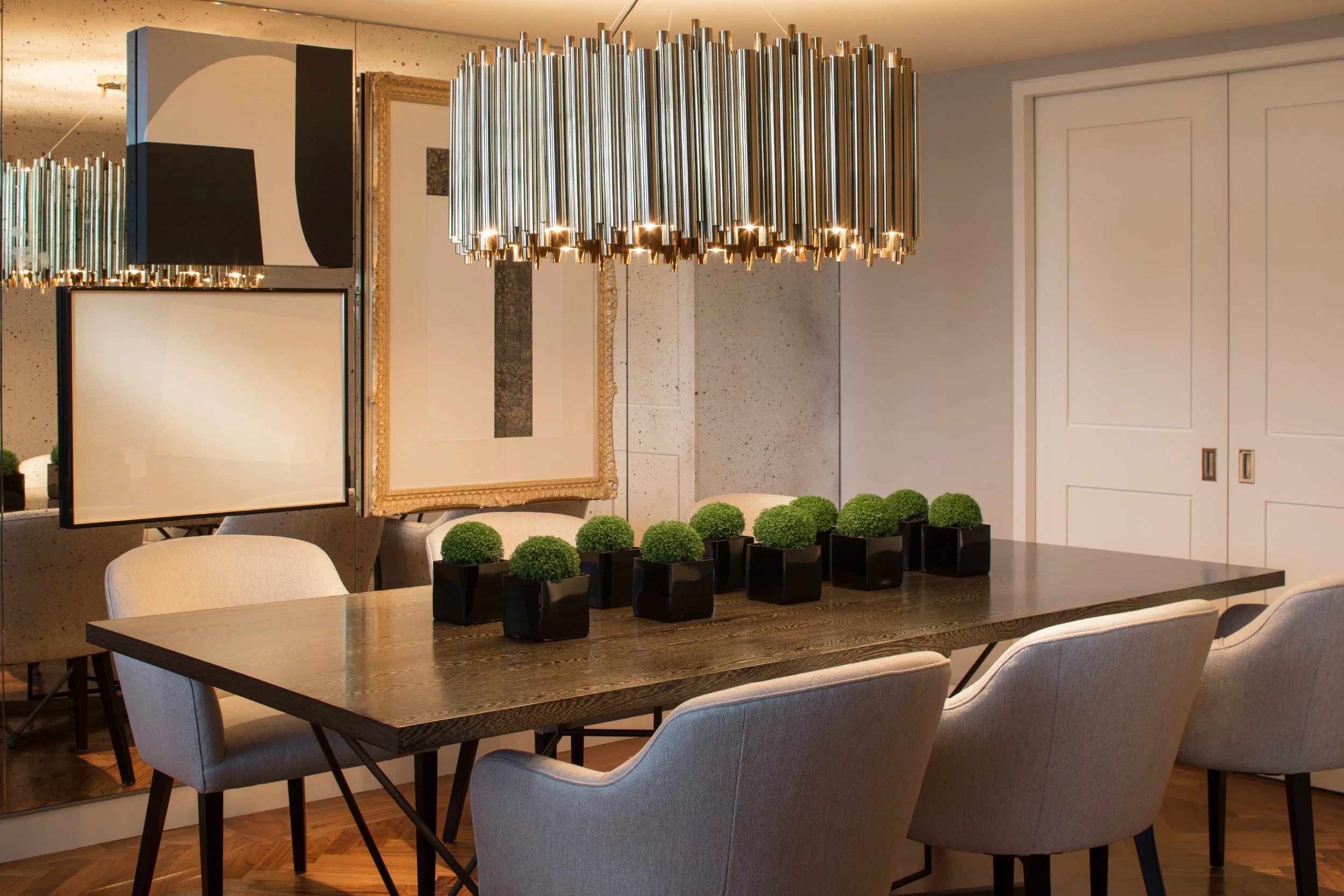
Photography: Richard Waite
A client rarely arrives with no idea of what they want. They may have saved photographs, admired rooms, loved certain materials, and be certain about what they dislike. There may be a list of practical requirements, including furniture to accommodate, the number of bedrooms, a preferred palette, and perhaps even a fairly precise idea of how the finished house should look.
All of that is useful, but it is not yet the brief. The more interesting brief tends to emerge beneath it, in how people describe their lives rather than their taste. Who gets up first in the morning? Where does everyone gather when friends come over? Is dinner usually formal, or does everyone end up around the kitchen? Does someone work at the dining table despite having a study? Are the doors usually open to the garden? Is there a chair nobody uses and another that everyone competes for?
These details can tell you more about the house a client needs than a folder of reference images. This is why the early stages of a project require a particular kind of listening, one attuned to behaviour, habits and contradictions as much as to preference. Someone may say they want a formal living room while describing a life in which family and friends gather casually every weekend, or insist they dislike colour while repeatedly responding to rooms whose atmosphere depends on it. Someone else may ask for enormous amounts of storage when the real problem is not quantity but where particular things are kept and how often they need to be reached.
The stated request matters, but so does what lies behind it. Often, the more revealing information arrives almost in passing: a client mentions that everyone enters through the side door rather than the front, or that breakfast is the only meal the family reliably eats together. They might admit they never use their current sitting room because it feels too formal, or notice that guests end up in the kitchen no matter how carefully the rest of the house has been prepared. None of these observations sounds particularly significant on its own, yet each can change the way a house is planned.
There is also a future brief. A house is rarely designed for a single frozen moment in someone's life: children grow older, families expand and contract, work patterns change, parents visit for longer periods, and entertaining becomes more or less frequent. What feels essential at forty may become inconvenient at sixty, and residential design has to respond to the life being lived now without becoming too specific for the life that follows. This does not mean the house should be neutral or endlessly flexible; quite the opposite. A deeply personal interior can be very specific, so long as it comes from understanding someone rather than simply reproducing their current preferences.
That understanding takes time. Clients do not always know which pieces of information matter, because why should they? They are not expected to translate their lives into circulation diagrams, furniture plans, lighting requirements or architectural relationships; that is part of the designer's work. Nor should the process become an interrogation. Often, useful information emerges through ordinary conversation, by noticing what a client returns to repeatedly, what they dismiss quickly, and where what they say appears to contradict how they actually live. Sometimes what a client says they want is exactly what they need, and sometimes it is not.
The responsibility is to interpret the brief rather than simply follow it, to uncover the ambition behind the request and find a way to satisfy it, even when the answer looks different from the one first imagined. A brief worth having is rarely written in a single meeting; it is discovered gradually, through questions, observation, drawings and conversation. As the project develops, the client understands the possibilities more clearly, and the designer understands the client more fully. Eventually, the brief stops being a list of rooms, objects and preferences and becomes an understanding of how somebody wants to live.
Once you understand that, you can truly design the house they were trying to describe.
Daniel Kostiuc Interior Design is a luxury interior design studio based in Brisbane, offering residential interior design and interior decoration across Queensland, Australia and internationally. Services include new builds, renovations and complete furnishing projects, with space planning, custom joinery, bespoke furniture, furniture selection, lighting, art and accessories for high-end homes.