
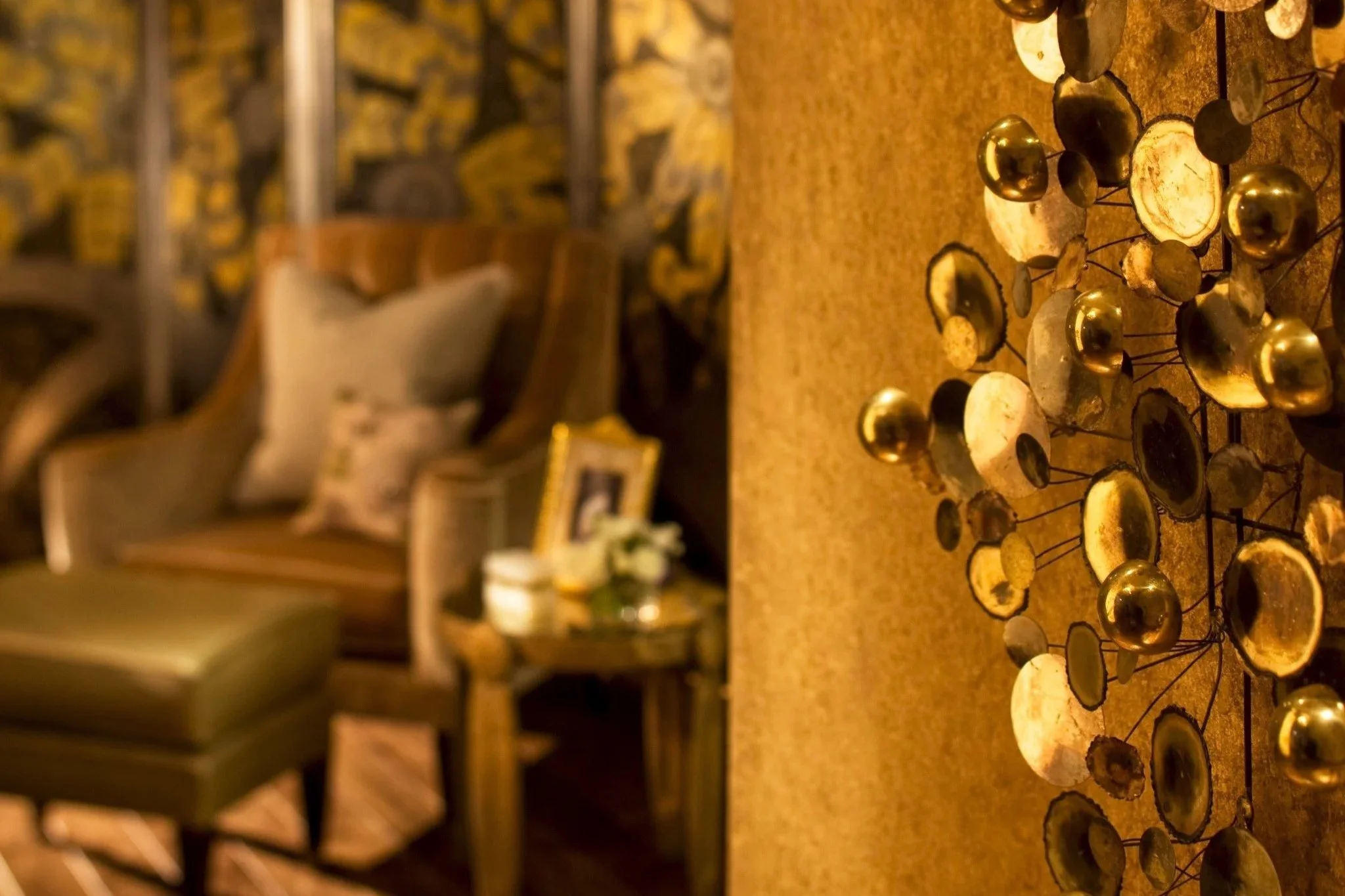
Photography: Richard Waite
The most telling shift in luxury this decade has nothing to do with taste. Clients at the very top of the market have stopped asking what something looks like and started asking where it came from, who made it, and how long it will last. The answers to those questions, more than any moodboard or reference image, now decide the commission.
In the early 2000s, that decision made itself. The status signal was the brand: a printed logo or a recognisable silhouette that did the talking, so the object didn't have to. It worked because it was legible from across a room, and that legibility was the entire point. The trouble is that a signal this easy to read is also the easiest to copy. Once a symbol can be counterfeited on a market stall, it stops being scarce, and once it's no longer scarce, it no longer functions as a luxury signal. The brand era didn't end because taste changed. It ended because the signal broke.
What replaced it can't be counterfeited the same way, because it isn't a symbol at all. A marble table made by an artisan from a specific quarry carries its story in the material and the craft. A textile woven on the last loom capable of producing that particular pattern can't be sourced anywhere else. Being the only one changes what scarcity even means and introduces something the logo era never had to reckon with: time.
A workshop with one loom and one master craftsman can only produce so much in a year, and the waiting list becomes as much a part of its value as the object itself. Clients used to buying anything instantly discover that the piece they actually want has an eighteen-month queue attached to it, and that queue does more reputational work than any logo ever could. Nobody can pay to skip it, because there's no larger workshop to sell them a shortcut.
Genuine scarcity, the kind manufactured brands can only simulate, is what that fixed capacity actually protects: a single piece made once, for one client. I've worked this way from the start, not as a stylistic position but as an inherited one; my grandfather made furniture by hand, and I grew up understanding a chair as a set of decisions made with specific tools, not a product that happened to arrive in a room.
Pieces like this often come with proof: a mark stamped on the underside, paperwork linking the object to a date and a workshop. That documentation does for a piece of furniture what provenance papers do for a painting. It stops being a mere record and becomes part of what the piece is worth.
Worth like that isn't settled only at the point of sale, though. Longevity is the second half of the argument, and it's often mistaken for a sustainability talking point when it's really a different kind of purchase decision. A piece built to last a century invites repair rather than replacement, and repairability is the real dividing line between what's truly luxury and what's simply expensive and disposable. Traditional joinery can be dismantled and remade by the next generation of craftsmen. Glued composite construction, however beautifully upholstered, generally can't. One of these objects ages. The other degrades until it's replaced, at which point the brand that sold it also sells the replacement.
That distinction determines who the piece is really for. An object designed to be replaced in ten years serves the person who bought it. An object built to be repaired for a hundred years serves whoever inherits it next.
That same instinct about inheritance explains a habit I keep running into with these clients: they want to meet the person who made the piece rather than the brand's creative director, whether that means a studio visit or a note on who cut the stone. That instinct isn't sentimentality so much as due diligence, since buying the piece means buying into the maker's ongoing skill as well.
Daniel Kostiuc Interior Design is a luxury interior design studio based in Brisbane, offering residential interior design and interior decoration across Queensland, Australia and internationally. Services include new builds, renovations and complete furnishing projects, with space planning, custom joinery, bespoke furniture, furniture selection, lighting, art and accessories for high-end homes.