
Photography: Alexandra
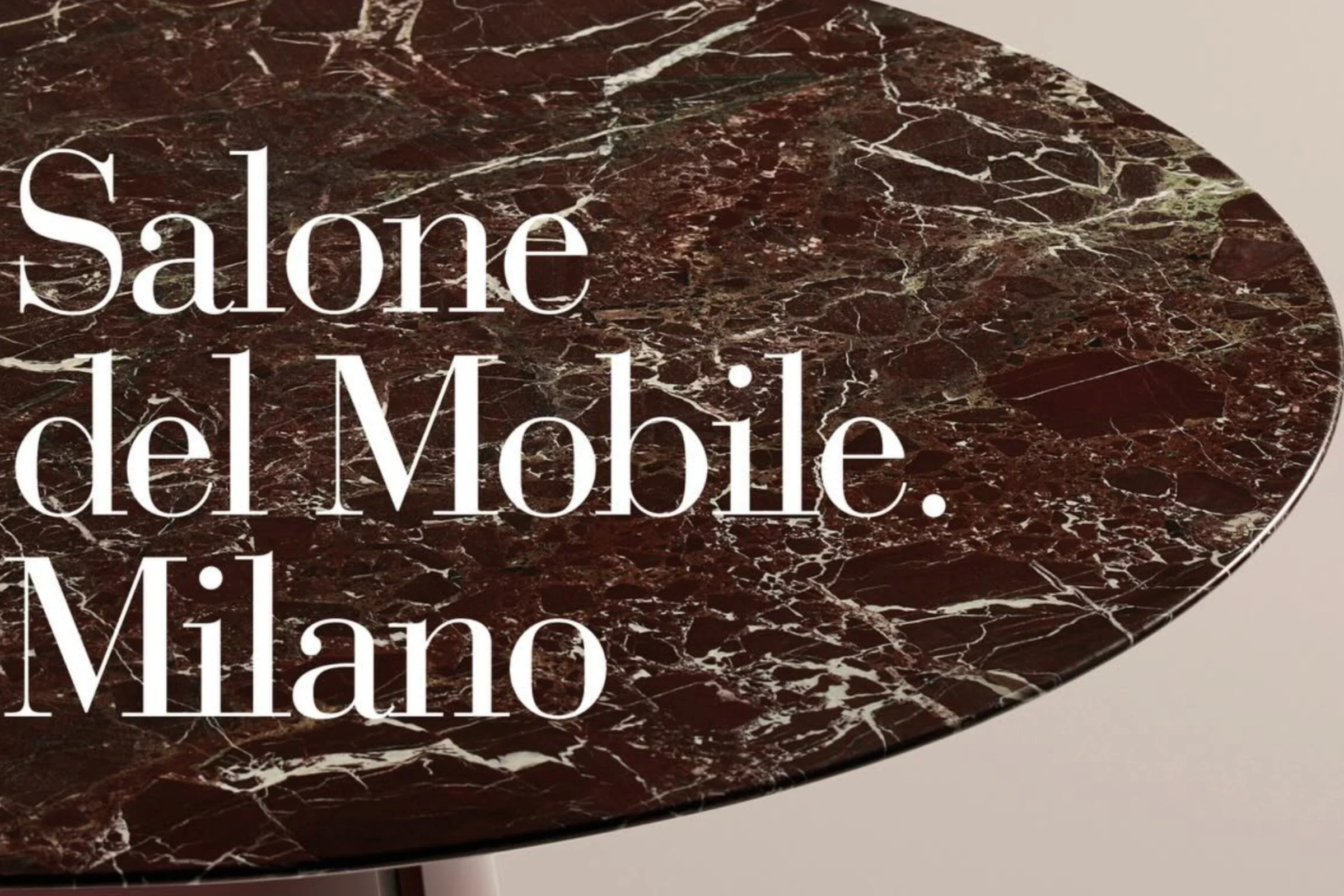
By the time this is read, the countdown to Milan will be underway. Design Week runs from the 20th to the 26th of April, and across Brisbane studios, flights are being booked and diaries cleared. For Australian designers, the journey is considerable, and the scale of what awaits is hard to grasp until experienced. Salone del Mobile occupies vast halls at Rho, while exhibitions spread throughout the city. In 2025 alone, it brought together more than 2,100 exhibitors and visitors from over 150 countries.
I attended every year while based in London, and in 2013, a furniture collection I had designed, the Kos Collection, launched through the Italian atelier Orsi. But exhibiting is only one reason to go. For an interior designer, Milan is a chance to see design before it has been filtered through magazines and the commercial decisions that determine what eventually reaches Australia. A photograph can tell you what a chair looks like. It cannot tell you how it feels to sit in it.
A sample can show a textile’s colour, but not how it behaves across an entire sofa; stone, timber and plaster reveal qualities at full scale that are almost impossible to read from a screen. Some objects that look remarkable in photographs turn out strangely ordinary in person, while others barely register online yet are unforgettable at full scale. Milan lets those judgements happen directly, which matters because geography still shapes what a Brisbane designer is exposed to.
Australia has excellent showrooms, suppliers and makers, and that network keeps growing, but no local market can represent everything produced internationally. By the time a collection reaches a showroom here, someone has already decided which pieces will sell and which manufacturers are commercially viable. That selection is necessary. It is also a filter, and going to Milan means briefly stepping behind it.
You might discover a small workshop producing beautifully cast bronze hardware, a textile house without an Australian distributor, or a maker working with a material you have never encountered. Not everything needs specifying immediately; often the value is simply knowing it exists. Years later, a client or a room presents a problem, and something seen in Milan becomes the start of an entirely different idea.
This is one reason I am cautious about reducing Milan to a trend report. Recurring colours and materials appear each year, and 2026 coverage again highlighted tactility and craftsmanship. But knowing what is fashionable is, on its own, not a very interesting reason to be there. A house designed around what was visible one April risks looking dated very quickly.
The more valuable exercise is to look for substance: which pieces would still be compelling without the installation around them, and which manufacturers are developing real technique. Milan makes those distinctions visible, since extraordinary work sits beside ordinary work and volume forces judgement, putting Australian design into perspective. Our relationship with landscape isn't the same. The light here has its own character, and houses are lived in differently: a piece conceived for a Milan apartment may need an entirely new setting; a textile calibrated for soft European light can behave unpredictably under Queensland sun; and furniture arranged for compact interiors may need rethinking in houses that open onto terraces and gardens.
International design is most useful when translated rather than imported wholesale: a maker worth bringing into a Brisbane project, a technique worth commissioning locally, or a material admired in Italy that is simply unsuitable for Queensland. Brisbane is becoming a more sophisticated design city as its clients draw on more international references, and the design community serving them cannot afford to become geographically insular. Going to Milan is about joining a larger conversation, then returning home with a wider vocabulary to make something that belongs here.
Daniel Kostiuc Interior Design is a luxury interior design studio based in Brisbane, offering residential interior design and interior decoration across Queensland, Australia and internationally. Services include new builds, renovations and complete furnishing projects, with space planning, custom joinery, bespoke furniture, furniture selection, lighting, art and accessories for high-end homes.