
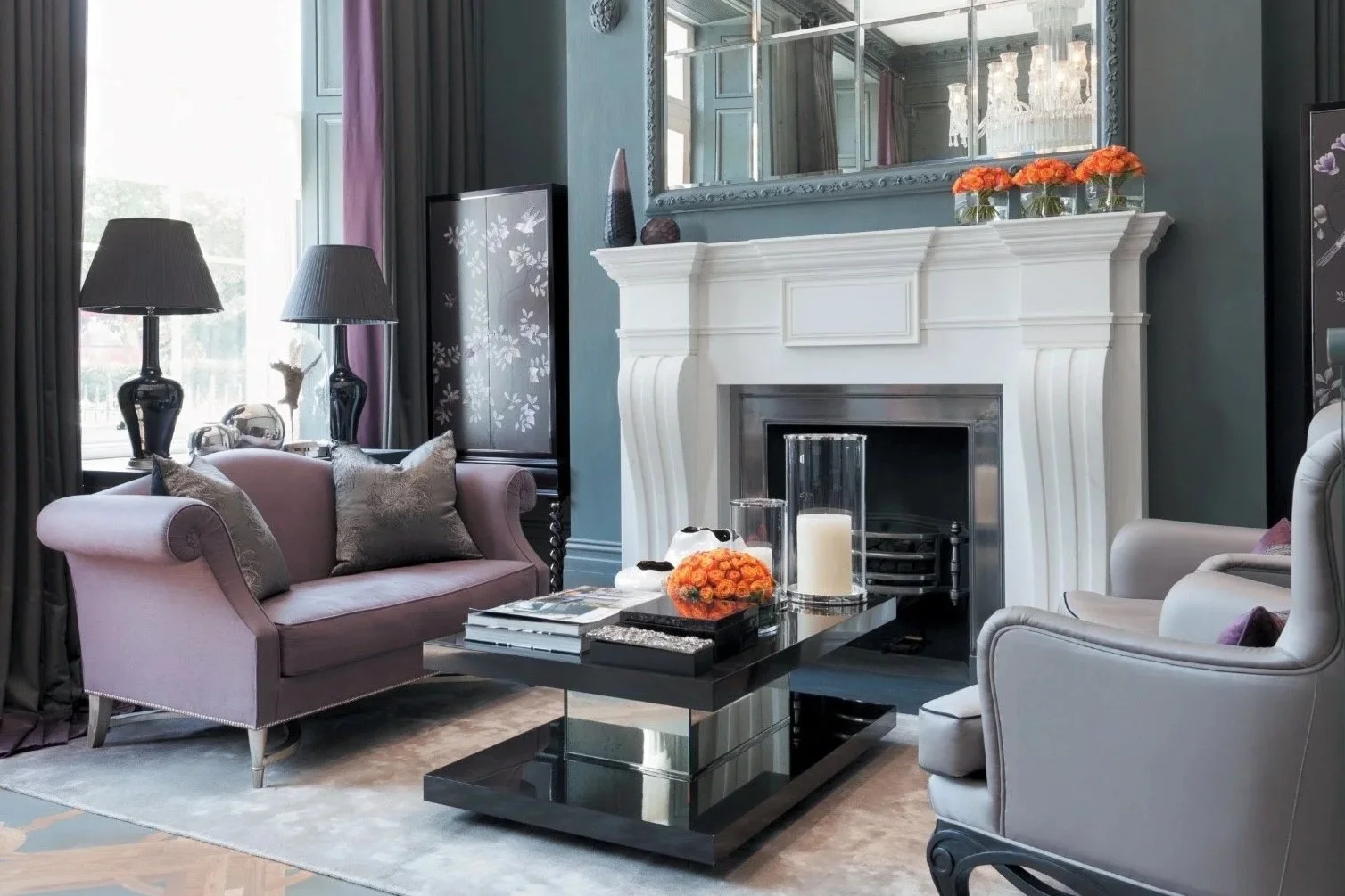
Photography: Richard Waite
Most clients understandably want a room to look finished the day it is delivered. The more revealing question is how it will look once it stops being new. The best clients want to know how it will look once it stops being new. That distinction, between materials chosen to perform on delivery day and those chosen to improve for decades after, separates considered design from decoration that is simply waiting to be replaced.
Patina is the word for this: the change a material undergoes through use rather than neglect. Brass darkens and develops depth where hands have touched it for years. Leather softens into the shape of whoever sits in it. Stone polishes itself, almost imperceptibly, in exactly the places feet actually travel.
This is different from wear in the sense of damage. A material with genuine patina is not degrading. It is recording. Every mark is evidence that the object has been used in a home that was actually lived in.
The opposite of patina is a material that simply looks tired. Laminate scratches and stays scratched. Certain paints chalk and fade unevenly. Many synthetic surfaces have no capacity to develop character at all, because their finish has nowhere further to go. They were complete on day one, and every day since has only brought decline.
Specifying for patina requires understanding a material's full lifecycle before it is ever installed, not just its appearance in a showroom under careful lighting. Unlacquered brass will darken unevenly, depending on which surfaces are touched most. Certain timbers silver in direct sun in a way that is beautiful, while others simply look bleached. Natural stone, honed rather than polished, will take on a soft sheen exactly where it is walked on, and stay matte everywhere else.
The clients who understand this fastest are usually the ones who have lived with something for twenty years and loved it more at year fifteen than they did when it was new. That is the standard worth designing toward, not how a room looks on delivery day, but how it will look and feel a decade after everyone has stopped paying attention to it.
Daniel Kostiuc Interior Design is a luxury interior design studio based in Brisbane, offering residential interior design and interior decoration across Queensland, Australia and internationally. Services include new builds, renovations and complete furnishing projects, with space planning, custom joinery, bespoke furniture, furniture selection, lighting, art and accessories for high-end homes.