
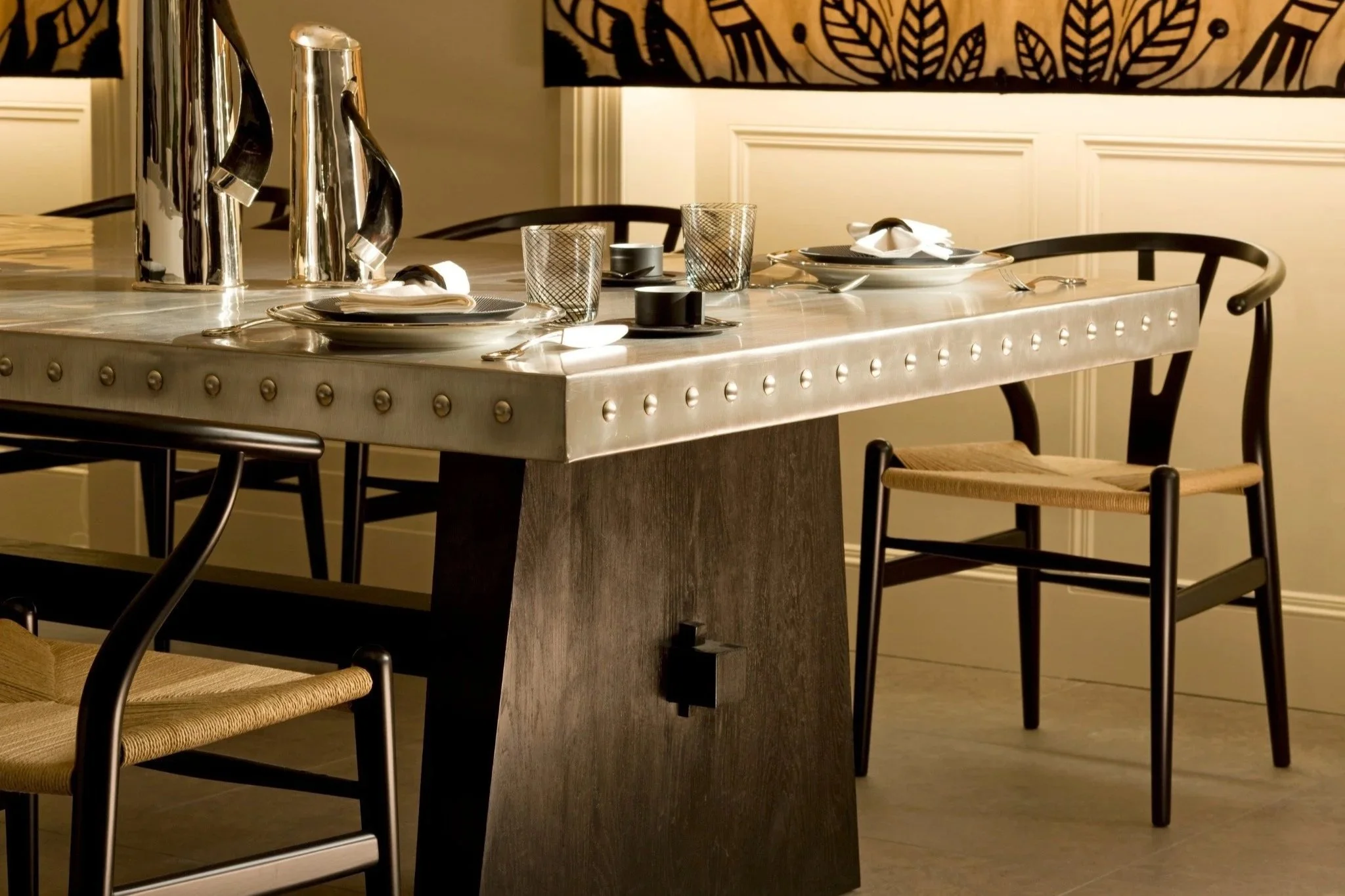
Photography: Richard Waite
The brief is the design. Everything else is execution.
I have said this to clients, to students, to designers earlier in their careers than I am in mine. I believe it completely. And yet the brief is the part of the process that clients and designers alike most consistently shortchange.
This is not because anyone disagrees with the principle. The problem is that constructing a well-understood brief requires harder conversations than most designers want to have at the beginning of a project, when the client is excited, and the instinct is to move quickly into the pleasurable work of designing.
The conversations I mean are these:
The first is about failure. Not future failure, but current failure. What does not work in the space you have? What room do you avoid? Where do things end up that were never given a proper place to go? What do you apologise for before a guest has even asked? These questions are uncomfortable because they require the client to acknowledge that their current home has not fully worked. But the answers are always more valuable than any answer to the question of what they want.
The room a client avoids tells me more about what their new home needs than any positive aspiration.
The second conversation is about behaviour, not aspiration. How does this family actually move through their home at 7 am on a Tuesday? Not on a Saturday night when they have guests. Where do the shoes actually land, not where a shoe rack was placed for them to land? Who is the first person awake, and what do they need before anyone else does? Where does a laptop end up at 9 pm? The aspirational version of how a family lives is almost always what appears in the brief. The actual version is what I am designing for.
The third conversation is about time. How long will this house serve this family? What happens to a child's bedroom once the child has left it? What in this room needs to last twenty years, and what only needs to last five? Is this brief describing who you are now, or who you were five years ago, a version of yourself you have not yet updated? A home designed for young children and the same home designed for that family in ten years are not the same home.
None of these are questions a client arrives ready to answer. They are also not questions most clients are ever asked, because most design conversations begin with preference: the colours and finishes a client has already seen somewhere else and wants reproduced. A brief built only from preference describes a home nobody has actually lived in yet, including, often, the client describing it.
A brief that asks honestly about failure, behaviour, and time produces a different design than a brief that asks only about preference does. It is not a more complicated design. It is a more honest one.
And a more honest design is almost always a better one.
Daniel Kostiuc is an interior designer based in Brisbane, offering residential interior design and interior decoration across Queensland, Australia and internationally. Services include new builds, renovations and complete furnishing projects, with space planning, custom joinery, bespoke furniture, furniture selection, lighting, art and accessories for high-end homes.