
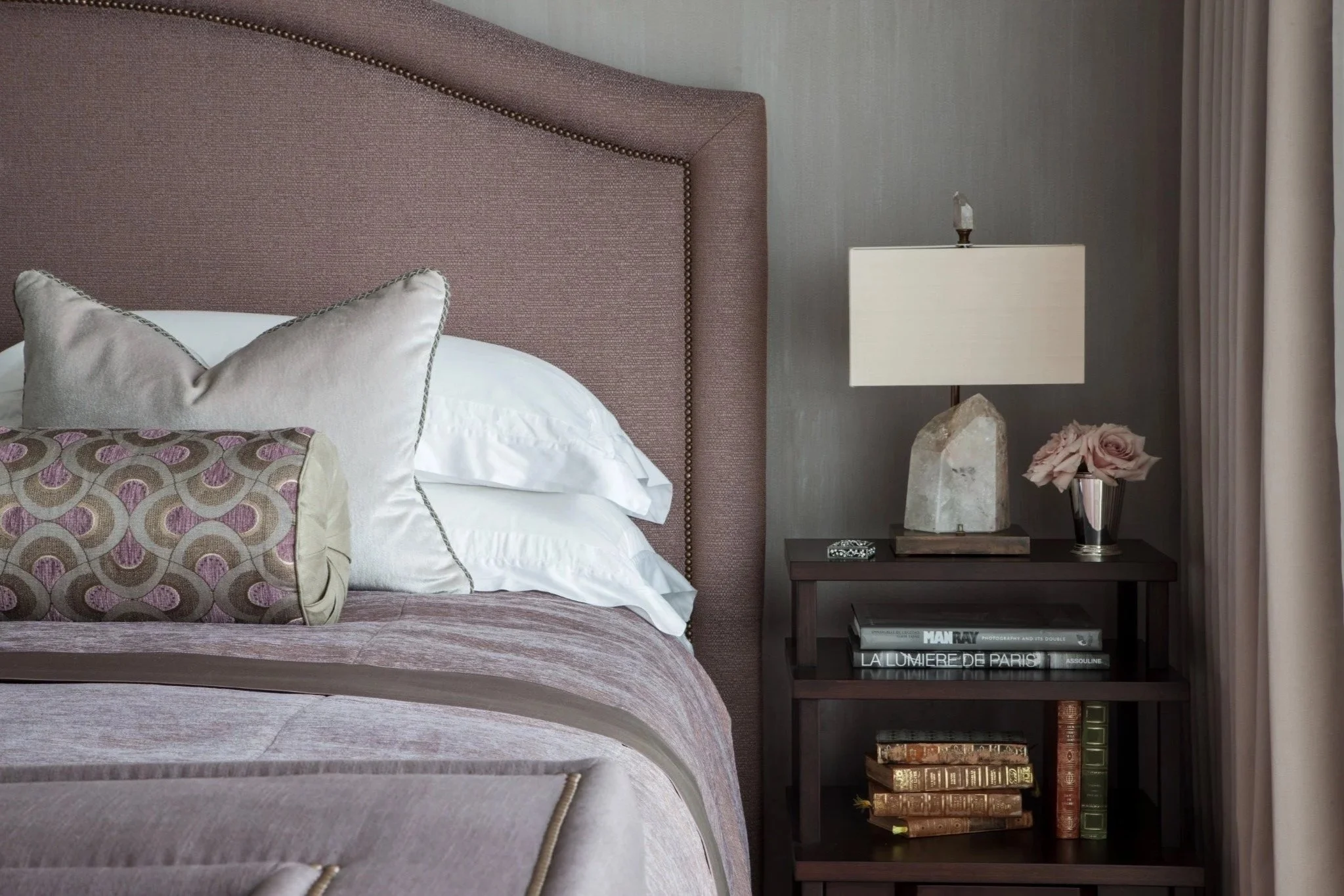
Photography: Richard Waite
Fabric is the material in a room that comes closest to the body. We sit on it, lean against it and touch it every day, yet it is still often discussed primarily in terms of colour and pattern. Those things matter, but they reveal little about whether a textile will give a chair the right posture, allow a curtain to fall properly or remain comfortable after years of use.
Cover the same chair in two different textiles, and it becomes two distinct pieces of furniture. Dense velvet gives the form greater weight and depth. Glazed linen makes its outline clearer and catches the light more sharply. Wool can lend body without formality, while leather follows the structure beneath it and gradually records the habits of the person using it. Silk has a luminosity few materials can match, but its delicacy may sit uneasily on a piece intended for daily life. The frame has not changed, yet its character, comfort and place within the room have.
This relationship between cloth and form is why textiles cannot be used as surface decoration. A material with too much body can overwhelm a fine antique frame or obscure the line of a precisely tailored chair. One that is too loose may make an elegant sofa appear uncertain. Thickness, drape, weave and finish determine how clearly the silhouette is expressed, while the construction beneath the cloth determines whether the furniture holds its intended character or appears tired before it has been used. A deeply comfortable sofa may require regular dressing to preserve its shape. A firmer seat may remain visually precise with less attention, but feel entirely wrong to a client who prefers to settle deeply into it.
The upholsterer’s work becomes visible in millimetres. A seam can sharpen a curve or interrupt it. Piping can define a chair’s edge, but a cord that is too thick or too contrasting may turn a quiet detail into an outline. The filling at the crown of a cushion, the tension across a back and the placement of a border all influence how the furniture is read. None of these decisions announces itself, yet together they determine whether the finished piece feels right.
Curtains ask the same material to perform at an architectural scale. A fabric seen in a sample only slightly larger than a hand may eventually cover several metres of wall. Its weight determines how it falls, how generously it folds, and how much space it occupies when drawn away from the window. The heading establishes rhythm across the top, the lining gives body and controls light, and the return determines how completely the opening is enclosed. A heavy cloth can lend a tall room a sense of ceremony, while something lighter may move more freely and preserve the delicacy of the architecture. The result depends on the window, the volume of the room, and the atmosphere intended.
Scale changes the pattern just as decisively. A motif that appears generous on a cushion can become restless when repeated across a wall of curtains. A large design may give an otherwise simple chair tremendous presence, then lose its force if used on every upholstered surface. Smaller patterns can remain almost unnoticed from across the room, revealing themselves only as someone approaches. Their distribution determines where the eye settles and which pieces are allowed to remain quiet.
These decisions cannot be made from a digital image or an isolated swatch. Fabric needs context and sufficient scale to reveal how its colour, surface and pattern will behave alongside the timber, stone, paint and daylight of the room. It also needs an honest understanding of use. Strong sunlight can fade colour and weaken delicate fibres. Linen will crease and relax. Some velvets show every change in pressure, while others recover readily. The question is not simply whether a fabric is durable, but whether its ageing and maintenance suit the client’s expectations. A material requiring constant care may become a source of irritation, however beautiful it appeared when first installed.
This is where price and luxury become unreliable guides. The rarest textile may be too delicate for the room, too formal for the furniture, or too demanding for the people who will live with it. A modest wool or linen may produce a more convincing result because its weight, texture and behaviour suit the object and its use. The judgement lies in matching the material to the furniture, its setting and the degree of care the client is prepared to give it.
Across a house, the richness of fabric comes from these differences. Crisp curtains can sit beside deeper upholstery. Leather can give definition to one chair, while linen softens another. A plain sofa may support cushions in silk, wool and embroidery without becoming a display of samples. Each textile brings its own weight, movement and response to light, yet all must belong to the furniture, the room and the lives unfolding there.
The right textile is fully understood only in use, when its appearance, comfort and behaviour become impossible to separate.
Daniel Kostiuc Interior Design is a luxury interior design studio based in Brisbane, offering residential interior design and interior decoration across Queensland, Australia and internationally. Services include new builds, renovations and complete furnishing projects, with space planning, custom joinery, bespoke furniture, furniture selection, lighting, art and accessories for high-end homes.