
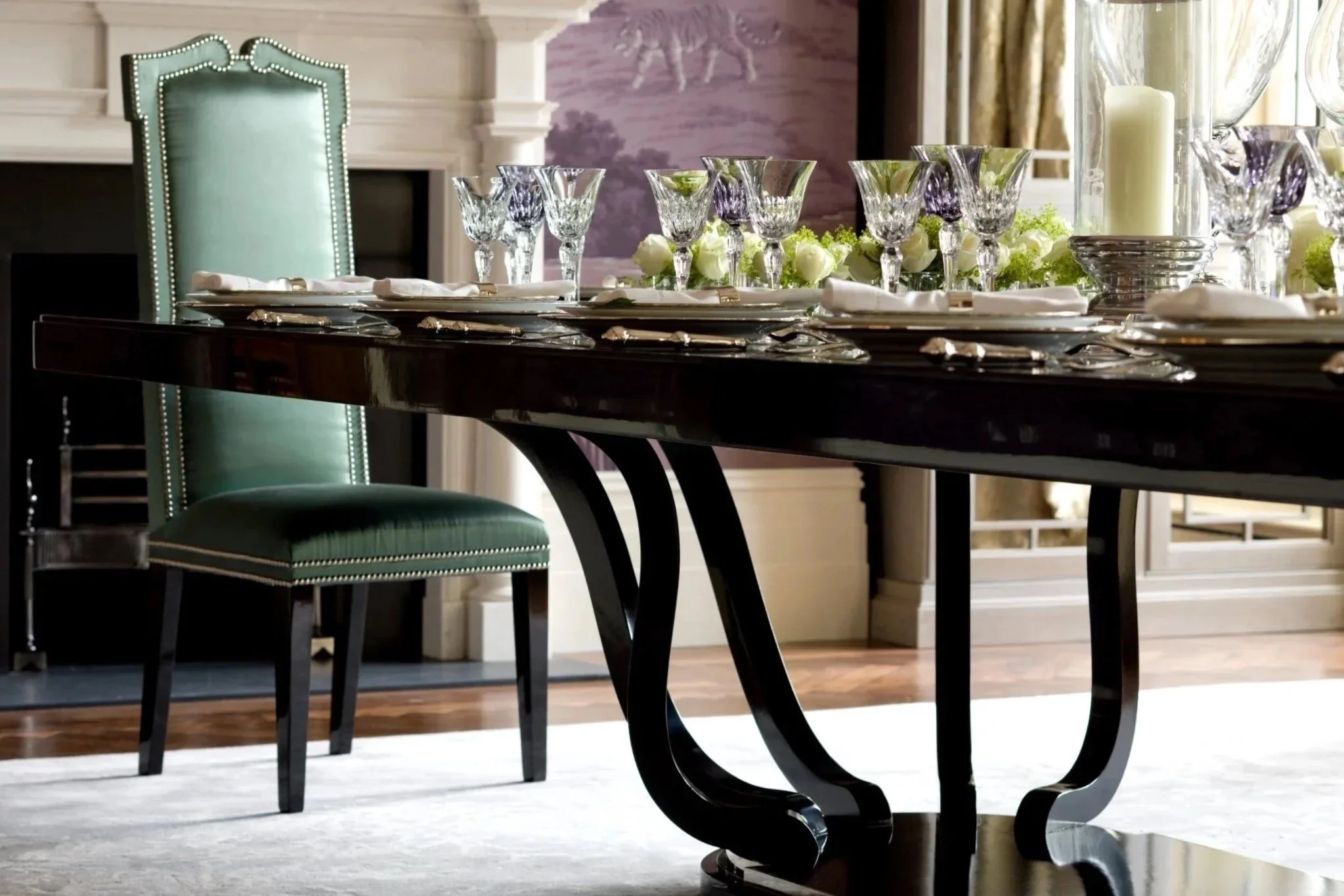
Photography: Richard Waite
Open-plan living was supposed to finish off the dining room, and across most of the market, it nearly did. As homes were reorganised for efficiency, every room had to justify its space through constant use. A primary bedroom could. A kitchen certainly could. A dining room, used for only a handful of meals each month, struggled to make the same case. Once dining was absorbed into the kitchen and living area, the separate room began to look indulgent, then old-fashioned, and eventually like wasted square metres.
Yet in the most generous homes, the dining room never disappeared entirely. Its survival has little to do with nostalgia. The room endures because it was never meant to compete with the kitchen for frequency of use. Its value lies in concentration. It takes one activity, gathering around a table, and gives it enough space, privacy and attention to feel distinct from the everyday life unfolding elsewhere in the house.
A room used constantly must absorb routine. Surfaces need to forgive hurried breakfasts, laptops, parcels and the quiet accumulation of domestic life. Chairs are pulled out without ceremony. Lights are switched on for illumination, not to create an atmosphere. Familiarity eventually softens the impact of even the most carefully considered interior. The edge of a stone island or the profile of a cornice may have been selected with enormous care, but repetition allows the eye to pass over them.
The dining room resists that process. Entered deliberately and encountered less often, it retains the power to command attention. The closing of a door, the lowering of the light and the setting of a table mark a subtle transition from one kind of experience to another. Polished timber reflects candlelight. Glass begins to sparkle. Fabric, plaster, metal and stone are observed at close range and over the length of an evening, rather than glimpsed while moving through the house.
That difference allows another kind of design response. A dining room can accommodate materials chosen as much for atmosphere as for durability. Walls may be lined with silk, lacquered to a deep gloss, or painted in a colour that would feel too intense across an entire open-plan space. Dining chairs can be upholstered in something more refined than the fabric used for a breakfast stool. Porcelain, silver and crystal can remain visible, becoming part of the composition even when the table is not set.
This does not make comfort secondary. A successful dining room must hold people effortlessly for several hours. The chairs need to remain comfortable long after the first course has been cleared. The table must feel generous without placing guests too far apart. There must be enough room to move behind each chair, enough light to see the food, and enough softness in the room to prevent every voice from competing with the next.
Because its purpose is so precise, the dining room reveals any approximation quickly. Proportion must work from a seated position, not merely from the doorway. A pendant must sit low enough to create intimacy without interrupting conversation. Light should flatter faces rather than simply illuminate the centrepiece. The acoustics need to allow six or eight people to speak naturally without the room becoming either hushed or overwhelming.
The contemporary dining room need not be sealed off and opened only on special occasions. It might host long Sunday lunches, impromptu suppers, family celebrations, or meetings that require more dignity than the kitchen table can provide. Its success lies not in remaining unused, but in maintaining a character of its own whenever it is entered.
The worth of a room cannot always be measured by the hours spent inside it. Some spaces earn their place by changing the quality of the time spent within them. They slow people down, sharpen attention, and give an occasion a setting equal to its importance.
The dining room endures because it remains one of the few rooms permitted to be this specific. In an age that asks every square metre to multitask, its deepest luxury is focus.
Daniel Kostiuc Interior Design is a luxury interior design studio based in Brisbane, offering residential interior design and interior decoration across Queensland, Australia and internationally. Services include new builds, renovations and complete furnishing projects, with space planning, custom joinery, bespoke furniture, furniture selection, lighting, art and accessories for high-end homes.