
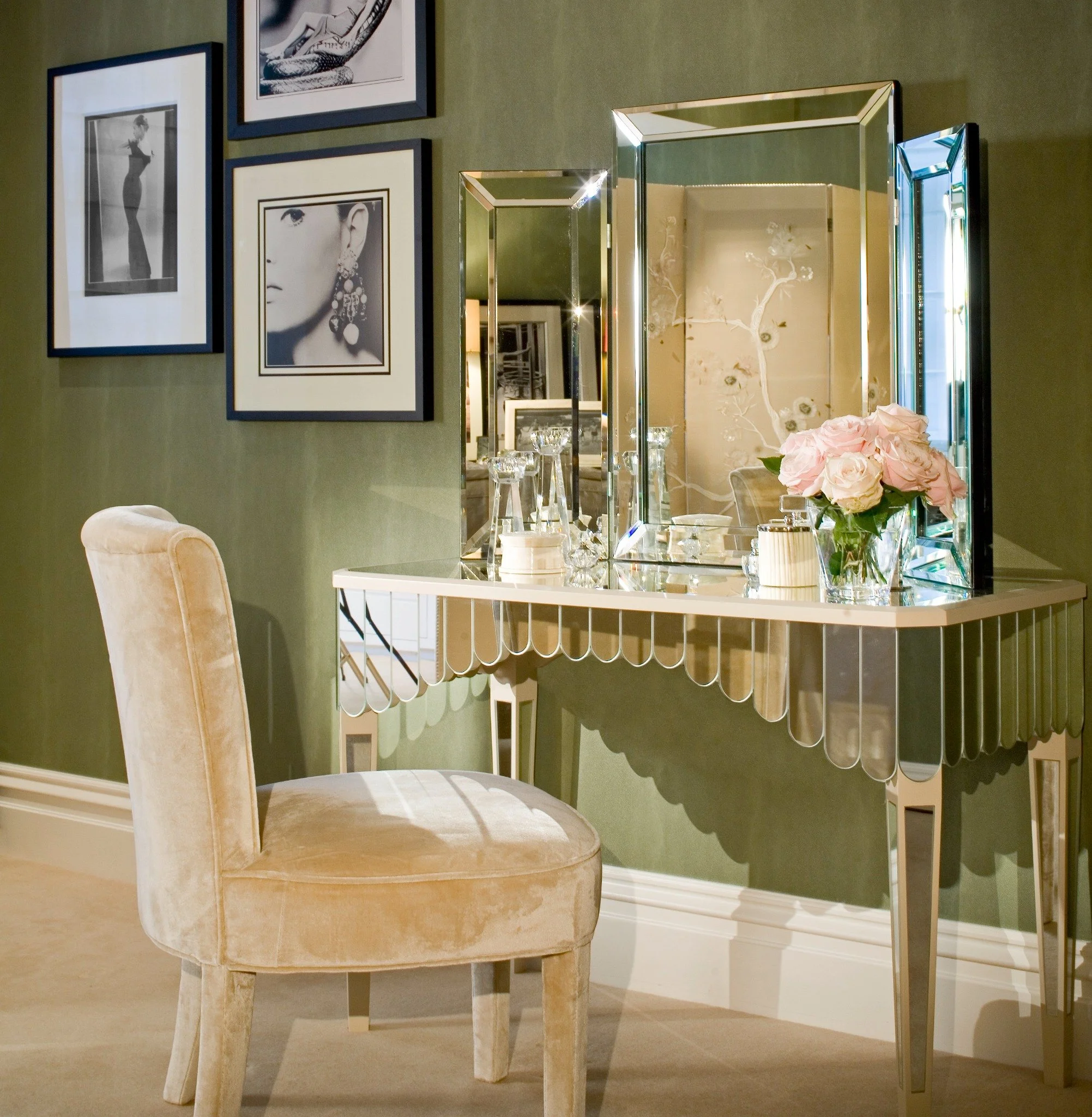
Photography: Richard Waite
When I began writing this Journal in January, I described it as a way of thinking in public. After more than twenty years in design, much of what I do has become instinctive, so writing forces me to re-examine those instincts: where they came from, whether they still hold, and which experiences changed them. Los Angeles is responsible for more of them than I realised.
I studied Interior Architecture at UCLA and began my professional life there, including time in Kelly Wearstler’s studio, where scale and colour were treated as design tools rather than risks to be managed. Los Angeles did not seem interested in asking permission. The interiors I encountered could be glamorous, eccentric, highly composed and unapologetically decorative. Furniture could be monumental, colour could determine the mood of an entire room, and stone was chosen as much for its movement as for its material value. Art, furniture, lighting and objects were allowed sufficient presence to compete with the architecture rather than quietly deferring to it.
That environment taught me something I still consider fundamental to interior design: make the decision. A room suffers when every choice is moderated in anticipation of the next: a smaller piece of furniture, a quieter fabric, a safer colour, a less unusual object. Nothing is particularly wrong, yet eventually nothing has enough conviction to establish the room’s character. A client can walk through it without being able to say what it was actually for.
I remember a room early in my career where a client wanted three rugs considered before we chose one, each slightly less assertive than the last, as though caution itself were a decision. It was not. The room that finally worked was the boldest of the three, the one everyone had quietly talked themselves out of. It remains one of the projects I am proudest of from that period.
Confidence is often mistaken for boldness. I thought the two were more closely related when I was younger. I do not any more. Some of the more confident decisions I make now are remarkably restrained: leaving a wall without art, using one material where five could have been used, or designing a piece of furniture with severe simplicity because the stone beside it already provides all the movement the room needs.
What Los Angeles left me with was not a taste for a particular aesthetic so much as a willingness to commit. If a room needs an enormous lamp, I am comfortable specifying one. If it needs almost nothing, I am increasingly comfortable with that too. Experience gradually changes confidence from something a designer demonstrates into something quietly used to reach a better room.
It also changes the relationship with a client. A designer’s responsibility becomes clearest when several perfectly reasonable options exist. Presenting all of them indefinitely is not necessarily good service. Eventually, someone has to understand the room well enough to say: this one. That conviction has to be earned through drawings, samples, proportion, experience, mistakes and careful attention to consequences, not simply announced with enough authority to sound persuasive. Once the work has been done, hesitation does not improve the answer. Los Angeles taught me that early. Years later, London would complicate the lesson.
Daniel Kostiuc Interior Design is a luxury interior design studio based in Brisbane, offering residential interior design and interior decoration across Queensland, Australia and internationally. Services include new builds, renovations, and complete furnishing projects, including space planning, custom joinery, bespoke furniture, furniture selection, lighting, art, and accessories for high-end homes.