
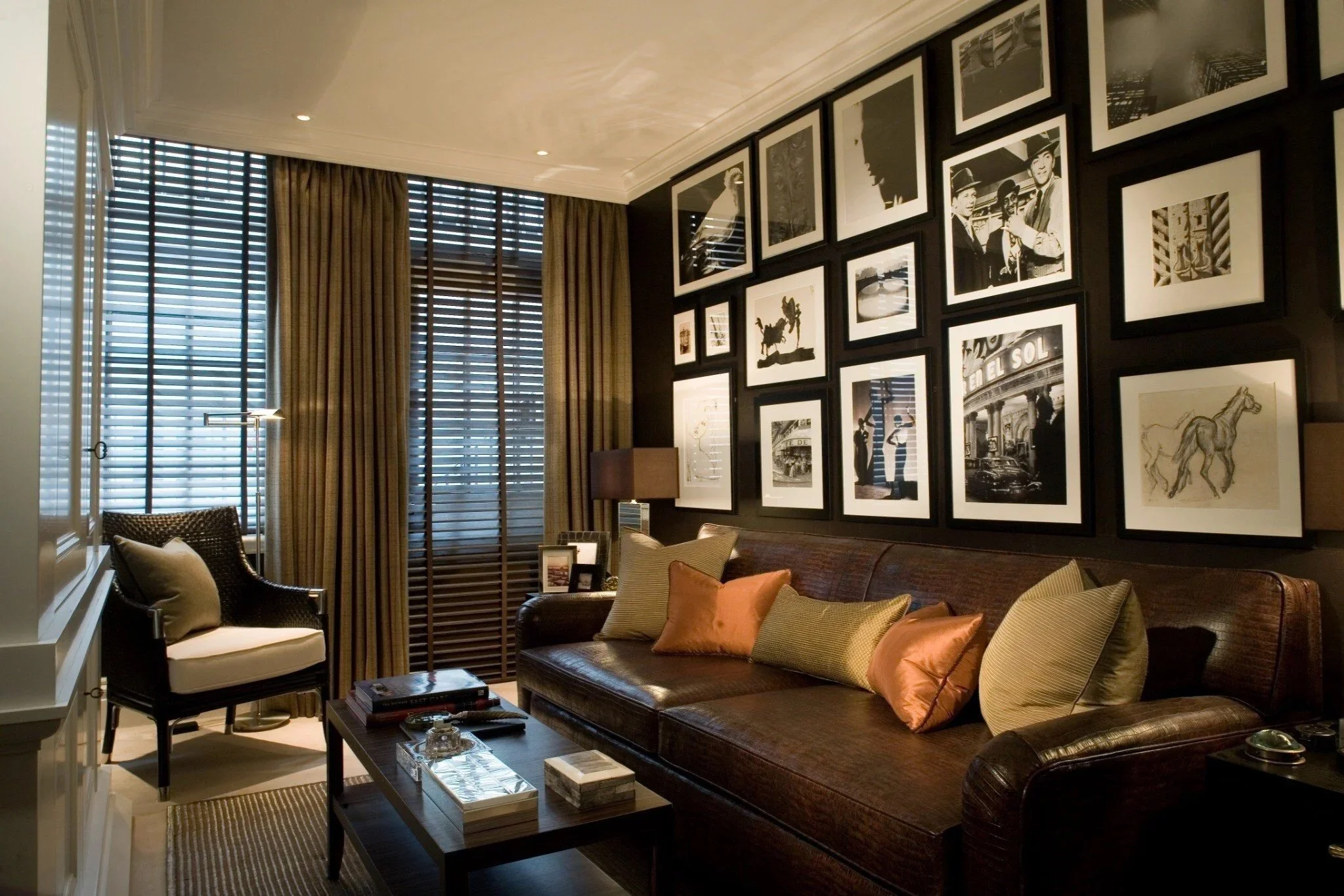
Den from Polished Depth, used here as related leisure-room imagery. Controlled light, comfortable seating and acoustic softness support several forms of shared recreation.
Specialist leisure rooms succeed when their technical requirements serve the way people gather. Location, sound, light, storage and access need to be resolved before the decoration.
A cinema, games room or wine room can look indulgent on a floor plan and prove remarkably useful in daily life. Each gives a particular activity somewhere to happen without asking the principal living room to absorb every form of recreation.
The room earns its place when the brief is precise. “Entertainment room” is too vague. A cinema designed for films, a games room used by children and adults, and a wine room intended for tasting have different requirements for location, light, sound, furniture and services.
Start with who will use the room
Decide whether the room is primarily for the household, guests or both. A cinema for two people differs from one used by a family. A games room may need to survive active use and allow supervision. A wine room could be a protected collection, an intimate place to sit or storage adjoining a larger entertaining area.
Frequency matters. A room used every week should sit naturally within the daily plan. A more occasional room can be further from the main living spaces, provided the route does not make it feel disconnected from the gathering it supports.
Choose the location by what must be contained
Sound from films and games can conflict with bedrooms and studies. Light spill can affect a cinema, and serving and cleaning create practical routes around a games or tasting space.
Before finishes are chosen, map the neighbouring rooms and services. Specialist acoustic, audiovisual, mechanical and wine-storage advice may be required. Their work can affect walls, ceilings, ventilation, power and access, all of which are difficult to add discreetly after construction.
Give a home cinema comfortable sightlines
The screen and seating should be planned together. Room length, viewing distance, speaker positions and the number of rows need specialist technical input. From an interior perspective, I also consider how people enter, where drinks are placed, whether every seat feels equally deliberate and how the room works before the film begins.
Darkness should be controllable rather than assumed. Low-level guidance can help movement without washing the screen. Materials and fittings should avoid distracting reflection. The wider principles of layered control appear in How to Plan Residential Lighting.
Let a games room accommodate change
The games room may hold a table game, screens, consoles, toys, music or a group of people doing different things. Furniture should be easy to rearrange without reducing the room to temporary pieces. Robust surfaces and useful storage matter because the room attracts equipment quickly.
A central games table needs clear space around it, and a sofa or banquette gives people somewhere to join without participating. These zones can share the room if circulation remains legible.
Decide whether the wine room is for storage or occupation
A wine collection requires suitable environmental conditions and storage systems advised by the relevant specialist. A tasting room adds seating, glassware, serving and cleaning. Combining both can expose the collection to changes created by frequent occupation, so the technical and social parts need to be reconciled.
The room should also connect logically to dining and entertaining. A dramatic cellar remote from the table may be less useful than protected storage with a small serving point closer to where wine is opened.
Design the room for sound as well as appearance
Upholstery, rugs, curtains and wall treatments can contribute softness, but they are not a substitute for technical acoustic design where isolation or controlled performance is required. The Room You Cannot See explains why a room can be visually resolved and still tiring to occupy.
The aim varies by type. A cinema needs intelligible sound without disturbing the house. A games room should keep several voices and activities from becoming harsh. A wine room for conversation benefits from quiet mechanical equipment and enough absorption to keep a small room comfortable.
Store equipment where it can be used and maintained
Controllers, games, cables, blankets, glassware and serving pieces need storage near their point of use. Audiovisual equipment may need ventilation and service access. Wine storage requires a system suited to the collection and specialist equipment.
How Much Storage Does a Home Need? sets out the inventory method. In these rooms, every concealed component should remain accessible to the person who needs to service or replace it.
The den from Polished Depth shown here is neither a cinema nor a wine room, but it shares their essential qualities in controlled light and a degree of acoustic softness. The specialist room should have an equally clear identity, grounded in what actually happens there.
If your home needs a dedicated room for film, games or a wine collection, contact the studio to discuss the interior brief and the specialist consultants required to deliver it.