
Photography: Richard Waite
‘Handmade’ has become so common in marketing that it often describes an appearance rather than a process. The difference between made and manufactured furniture becomes clearer inside a serious workshop. It lies in the point at which a maker stops merely executing a drawing and begins responding to the material at hand.
Working on so many projects where bespoke furniture, lighting and materials were the norm made that distinction tangible. Manufacturing establishes repeatability. Dimensions, tolerances and processes have to be controlled so that every piece belongs to the same design. Making introduces judgement within that discipline. The grain, movement and resistance of a particular length of timber are read, and the method is adjusted without compromising the intended form.
A drawing can specify overall dimensions, profiles, joint types and acceptable tolerances. It cannot anticipate the character of every board, how a veneer sequence will read across several doors, or the minor corrections required where separate components meet. Those decisions remain with the workshop. The better the maker, the less conspicuous these interventions become: the finished piece looks inevitable because difficulties have been resolved before they become visible.
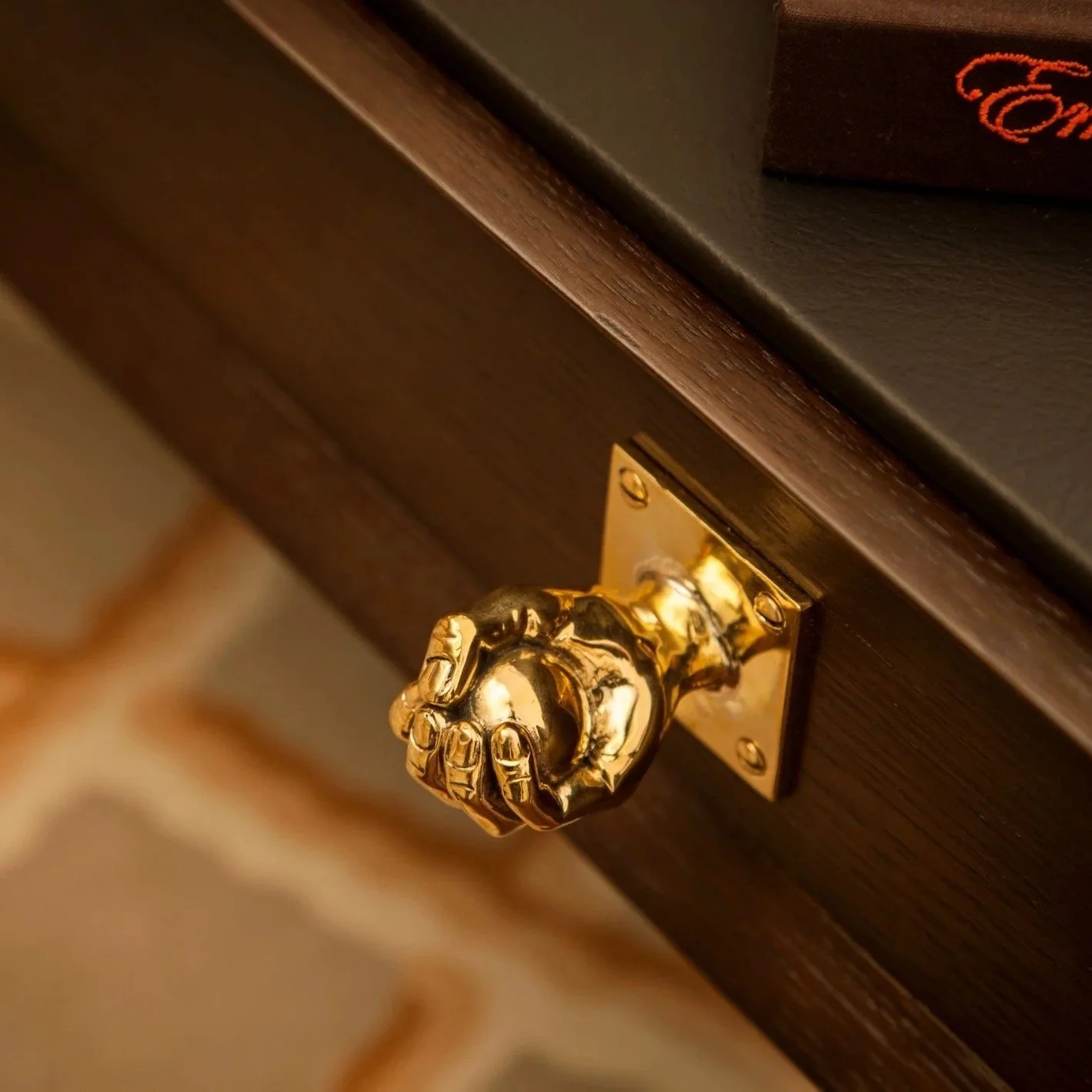
The bespoke study cabinetry in Artful Geometry offers a project example of how drawings, materials and skilled judgement interact.
During one run of dining chairs, the timber supplied for a batch showed slightly more movement than usual. The difference was not obvious to an untrained eye, and the material still met the acceptable specification. A rigid production line could have continued without any changes. The cabinetmakers I worked with adjusted the joint by hand, batch by batch, so the chairs would settle consistently despite the variation in the timber.
The adjustment took time and produced no visible advantage on the delivery day. Its value emerged later, when the joints remained sound rather than loosening as the timber moved. This is one of the difficulties in explaining craft to a client. The decisions that matter most may be invisible when the piece is new. Time reveals whether the people who made it understood what would happen after it left the workshop.
Manufacturing is not the opposite of quality. Precision and consistency can be significant achievements, especially when many components must fit together cleanly. The difference is that a genuinely made object leaves room for informed correction. The maker knows which measurements must remain exact and where the material’s behaviour should influence the result.
This distinction matters when selecting furniture for a residential interior. Appearance can be copied quickly, but construction determines whether a table can be refinished, a chair reupholstered, hardware adjusted, or a damaged component repaired without remaking the whole object. A piece intended to remain in a home for decades needs a life beyond its first installation. Serviceability is not an engineering detail added afterwards; it is part of the original design.
It also changes the questions to ask at a workshop. Who will make the piece? Which processes are fixed? Where is judgement expected? Can the finish be renewed, the hardware adjusted, or a component replaced? The answers reveal whether the workshop is selling an appearance or accepting responsibility for an object over time.
Once you recognise that judgement, it becomes visible in the turn of a stone edge, the placement of a veneer leaf, the tension of upholstery, or the quiet correction of a joint. The useful question is no longer simply whether the object looked perfect on delivery. It is whether the method anticipated how the object would move, wear, be maintained, and eventually be repaired.
Price and brand cannot reliably answer that question. A prestigious manufacturer may produce flawless objects with little room for material judgement, while a smaller workshop may possess extraordinary sensitivity. The intelligence between the drawing and the finished object is what matters. That interval, where knowledge shapes execution, is where making begins.
Daniel Kostiuc Interior Design is a luxury interior design studio based in Brisbane, offering residential interior design and interior decoration across Queensland, Australia and internationally. Services include new builds, renovations, and complete furnishing projects, including space planning, custom joinery, bespoke furniture, furniture selection, lighting, art, and accessories for high-end homes.