
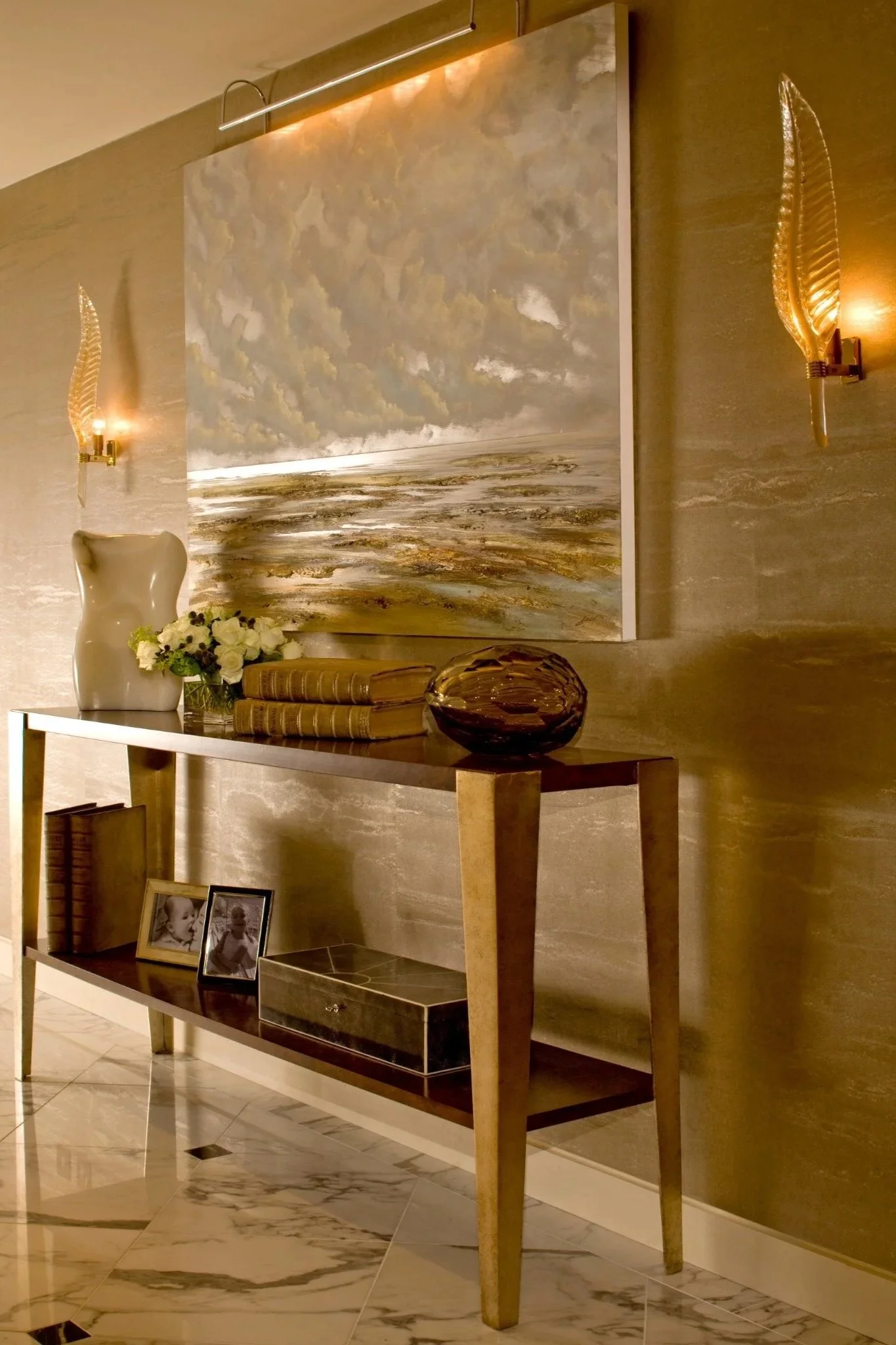
Photography: Richard Waite
The approved presentation is the visible part of the process. Behind it sits a detailed chain of quotations, specifications, orders, makers, freight, receiving and delivery.
Once an interior scheme is approved, every selected item has to become a correctly specified object in the right room at the right time. The presentation may show a sofa, lamp, rug and table together on one page. In reality, they may come from different countries, follow different payment terms and require separate freight and installation arrangements.
This work is less visible than design, but it is one of the ways the design is protected.
Turning selections into exact specifications
A product name is rarely enough to place an order. Size, finish, fabric, trim, electrical requirements, quantity and delivery conditions need confirmation. A dining chair may be available in several frame finishes and require a particular textile allocation. A light fitting may need the correct suspension length and ceiling support.
Before an order is released, the approved choice is checked against the drawings and related items. A specification error can be small on paper and conspicuous in the house.
Obtaining and comparing quotations
Quotations do more than confirm price. They record what is included, what remains provisional, the validity period, payment schedule, lead time, freight and installation assumptions. Two quotations that appear to describe the same item may allocate these responsibilities differently.
The studio reviews the information and brings discrepancies back into the approval process. This is also where substitutions sometimes emerge. If a material has been discontinued or a lead time has changed, the alternative must be judged against the whole scheme rather than accepted because it is available.
Placing and tracking orders
Sourcing and project coordination includes placing approved orders and maintaining a record of their progress. Deposits, production updates, balance payments and expected completion dates need to be tracked across many suppliers.
The aim is to understand the sequence rather than make every item arrive on the same day. A rug may be required before furniture placement, while a bespoke table should not be delivered before the route into the house has been checked.
Coordinating makers and bespoke work
Bespoke furniture and joinery move between design and making. Drawings, materials, finishes and practical details are reviewed with the workshop. A maker may identify a better construction method or a tolerance that needs adjustment. The design can respond while its proportions and purpose remain clear.
The number and type of bespoke pieces vary substantially from one commission to another. They are introduced where a particular scale or function cannot be resolved convincingly through an existing piece, never to satisfy a formula.
Managing freight and customs
An item leaving a workshop is not the same as an item ready for installation. Freight bookings, export documents, customs, local transport and delivery access may sit between them. Dates can shift, so the wider programme needs enough flexibility to absorb movement without losing control.
Furniture and objects may be received, checked and held in climate-controlled storage until the site is ready. Receiving creates an opportunity to identify visible damage or missing components before installation day. Where an issue arises, records and photographs support the follow-up with the supplier or carrier.
Reporting to the client
Clients should be able to see what has been approved, ordered, paid and delivered. The studio provides clear reporting and access to a live budget tracker. The detail matters because furniture expenditure is distributed across deposits, balances, freight and other costs rather than one transaction.
Reporting also helps decisions happen in sequence. A client can see which approvals affect long-lead items and which can wait without placing the programme at risk.
Preparing for installation
Before delivery, access and site conditions are confirmed with the handlers. Furniture plans become instructions for installation and final styling rather than presentation drawings. Art, rugs, lighting and existing possessions need to enter the sequence at the appropriate point.
The finished room may feel as though everything found its place naturally. Composing the Furnished Room explains how that visual order is designed. Procurement and coordination explain how the objects physically reach it.
The next article considers the cost of working with an interior designer, including the distinction between design fees and product expenditure.
If your project requires the studio to carry approved selections through ordering and installation, contact the studio to discuss the complete scope.