
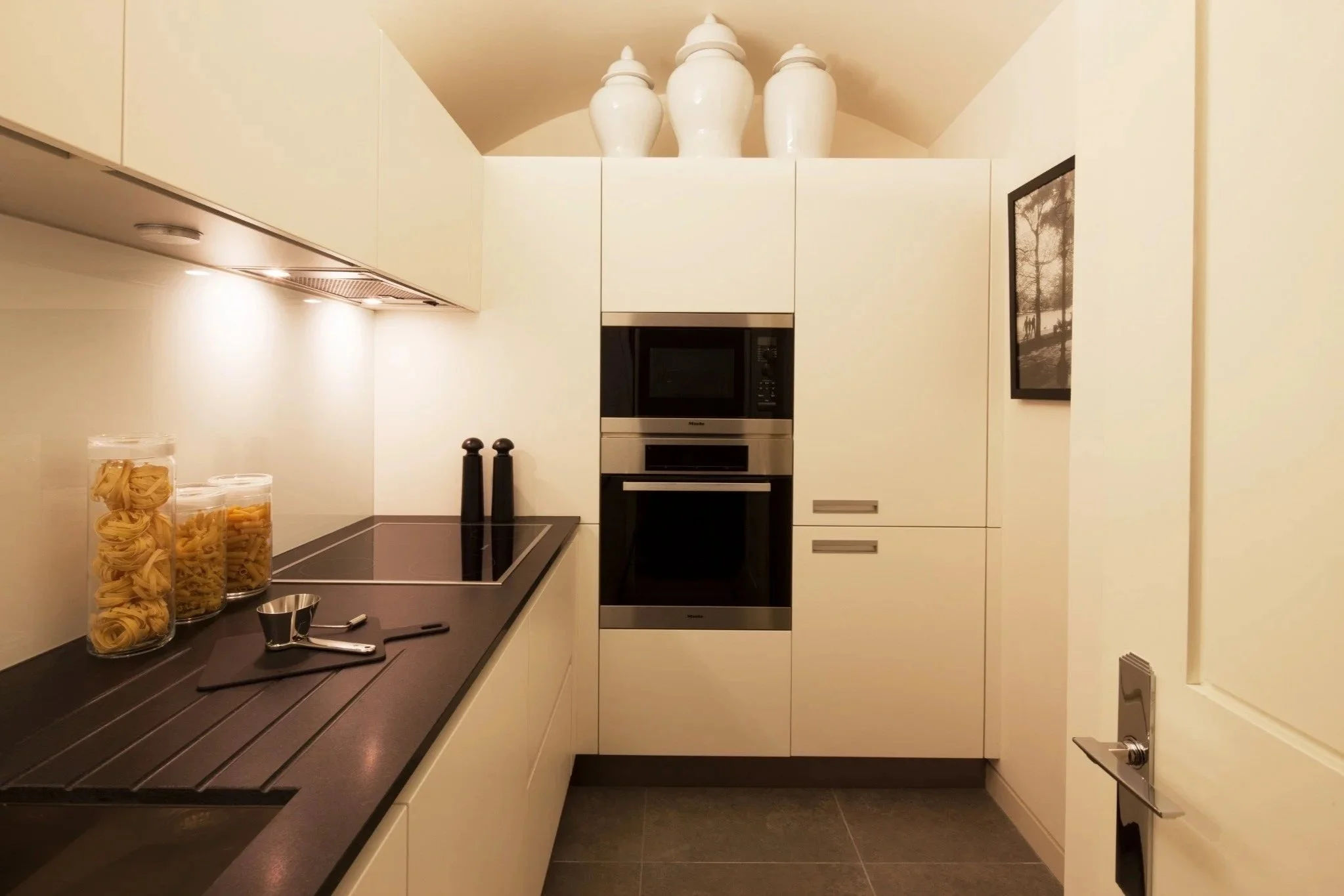
Photography: Richard Waite
The best time to appoint an interior designer is while the plans can still respond. Furniture, lighting, joinery and daily routines should inform the architecture before construction turns them into constraints.
For a new build or substantial renovation, the right time to hire an interior designer is before the plans are fixed. This may be alongside the architect at the beginning or while the first concepts are being tested. The essential point is that the interior designer joins while rooms, openings, services and circulation can still respond.
Later involvement can still improve a project. It changes the work from shaping decisions to working within them, and some consequential opportunities may already have passed.
For a new home, begin before the room sizes are settled
Room names and floor areas do not prove that a plan will furnish well. A generous living room may be crossed by several circulation routes, and a principal bedroom may have abundant glazing with no convincing position for the bed. A kitchen can be efficient on paper while the route to dining or outdoor space remains awkward.
An early furniture plan tests the architecture against actual use. It can influence window positions, door swings, floor boxes, lighting, wall lengths and the relationship between rooms. These are easier to adjust while they are lines on a drawing.
The architect and interior designer do not need to compete for authorship. They examine the same house through different responsibilities. My earlier article What Exceptional Projects Have in Common looks more closely at the value of appointing both early.
For a renovation, appoint before the scope hardens
Renovation often begins with a broad intention: open the rear of the house, add a principal suite, improve the kitchen or connect the home to the garden. Before a builder prices that idea in detail, the interior relationships should be tested.
The interior designer can help determine whether the problem requires structural change, joinery, furniture or a combination. An apparently necessary extension may partly be a planning problem. Conversely, a cosmetic allowance may be unrealistic if the kitchen and storage both need to move.
For a character property, early advice also allows the new work to respond to the scale and sequence of the existing rooms rather than treating them as obstacles to an open plan.
Appoint before kitchens and bathrooms are documented
These rooms concentrate decisions. Services, appliances, lighting, materials, storage and detailed dimensions must work together. If the interior designer arrives after the cabinetry package has been approved, meaningful changes may require redesign and delay.
The same is true of lighting. Decorative fittings can be selected later, but ceiling positions, switching, wall lights and integrated joinery lighting need coordination before walls and ceilings are closed.
Do not wait until the furniture stage if furniture affects the plan
Some clients assume the interior designer should begin after construction, when the empty rooms are ready to furnish. That timing can suit a pure decoration commission, but it is late when furniture placement should have informed the architecture.
A television, piano, major artwork, dining table or existing collection may require wall space, structure, power or a particular relationship with daylight. If these pieces matter, they belong in the conversation before the building is finished.
A late appointment needs a different brief
If construction is already under way, begin with an audit of what can still change. Unbuilt joinery, lighting selections, finishes, window treatments and furniture may remain open. Other decisions may be technically possible but disproportionate in cost or disruption.
I prefer to be clear about those limits. Rather than reopening every approved choice, the aim is to identify the changes that will materially improve the home and protect the remaining design from further fragmentation.
Timing should reflect the service you need
A complete new-build interior or renovation and spatial design service begins early. A furnishing commission can begin later, although lead times and installation still need to be considered before move-in.
The next article answers a related question: how long a whole-home interior design project takes. Appointment timing and project duration are connected. Starting early does not make the process unnecessarily long; it gives important decisions the time to be made in the right order.
If you are planning a new build or renovation, contact the studio while the plans can still change.