
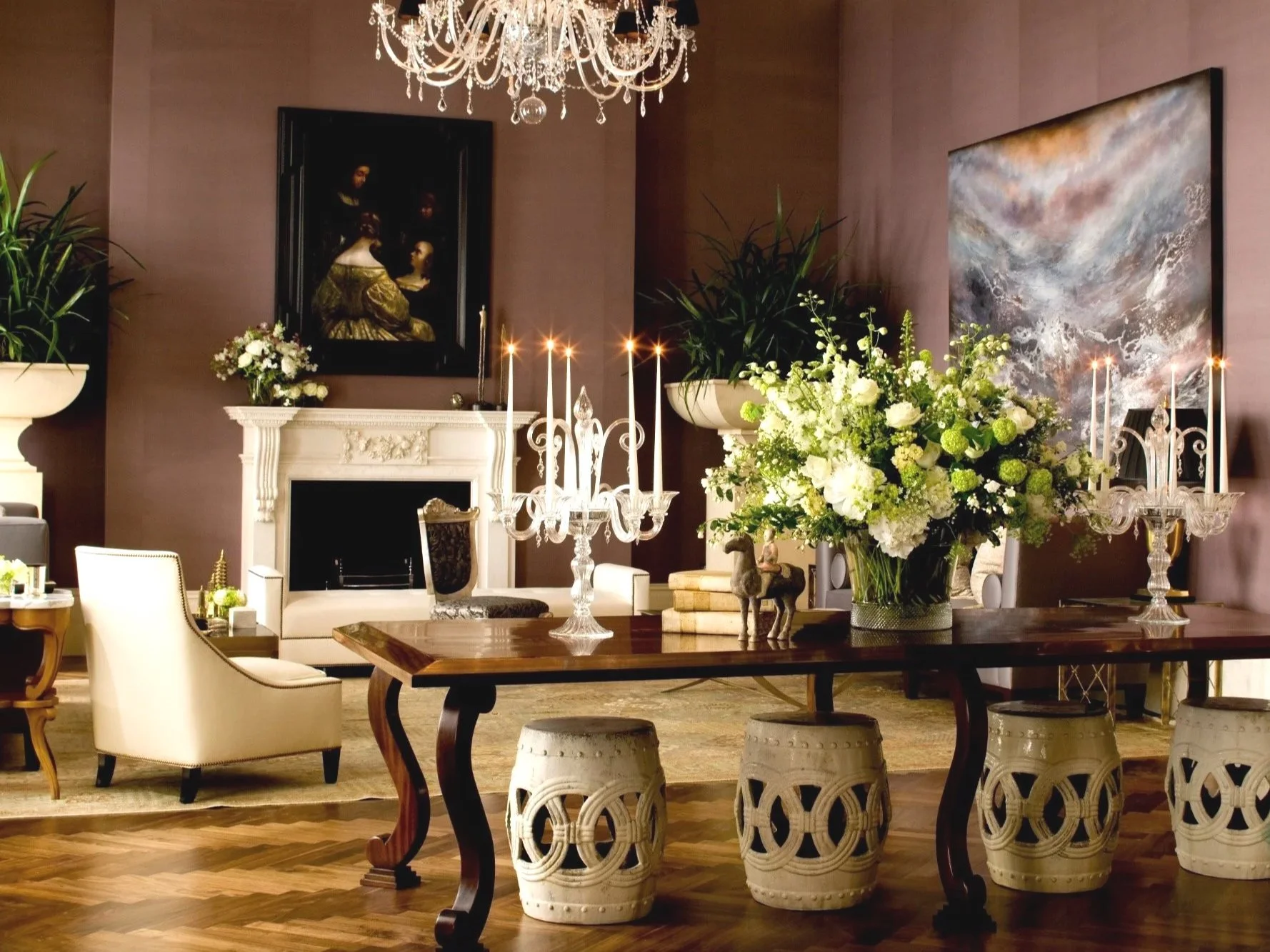
Drawing room from Collected Worlds. Furniture, art and objects from different periods are held together by the room rather than a single trend.
A unique interior does not need to reject everything current. It needs stronger sources of direction: the architecture, the household, existing objects and decisions made for that particular room.
A unique interior does not depend on rejecting everything current. It becomes individual when the reasons for its decisions come from the house and its occupants rather than from a complete image borrowed elsewhere.
Trends can introduce a useful material, colour or maker. The difficulty begins when they supply the room's entire identity. If the furniture and objects all belong to the same moment, the interior can age as quickly as that moment passes.
Read the house before choosing a style
Architecture gives the project its first set of constraints and opportunities. Ceiling height, openings, existing timber, fireplaces, views and the sequence between rooms all suggest different responses.
I would not give a Queenslander and a contemporary apartment the same furniture simply because the client admired one reference image. The personal brief matters, but it has to occupy a real building. A distinctive interior often begins by making that relationship specific.
Use the household's existing evidence
Art, books, inherited furniture and travel finds already contain a history that cannot be purchased as a package. The design should decide how that history appears. Some pieces may establish a room; others need repair or a different context.
This is not an instruction to keep everything. Editing gives important objects enough authority to be seen. It also prevents sentimental value from forcing a piece into the wrong scale or use.
Combine periods without disguising them
Rooms gain depth when old and new remain legible. A contemporary table can sit in a traditional room, and an antique cabinet can steady a new apartment. The relationship depends on careful judgement of proportion and material, and it fails when one piece is made to imitate another.
The Discipline of Mixing Old and New examines this subject directly. Within a whole home, the wider benefit is freedom: the interior is no longer dependent on one period staying fashionable.
Choose fewer recognisable answers
An interior assembled entirely from prominent designs can feel surprisingly anonymous. Each object may be excellent, yet the room reads as a collection of known references. Quieter pieces allow the particular combination to become visible.
I prefer to decide where recognition adds something and where it merely announces the source. A strong room usually has a hierarchy. Some pieces lead while others support, and a piece known only to the owner can be among the more valuable.
Commission work when the room calls for it
Bespoke furniture and joinery can give a house a detail that belongs nowhere else. The reason should be practical or spatial as well as expressive, such as a wall with unusual proportions or a table required to seat people in a constrained room.
The number and type of pieces vary substantially by project. Their value comes from precision, not from custom work being treated as a badge. The Difference Between Made and Manufactured looks more closely at what making contributes.
Ask where an object came from
Origin can be more useful than novelty. Knowing who made an object and how it can be repaired changes the way it is judged. My earlier article Provenance Is the New Status Symbol explores that shift in value.
Provenance alone does not make a piece right for the room, but it gives the decision another dimension beyond appearance. A workshop or vintage dealer may offer work with a specificity that a trend-led product range cannot supply.
Let colour come from relationships
A fashionable colour can still be the right colour. Test it against the light, architecture, art and materials rather than using its popularity as evidence. If it belongs, it will continue to make sense after the market has moved on.
The same applies to stone and timber. Materials become personal through their combination and use, not because they have escaped every current influence.
Build an interior that can accept change
A house can have a strong identity without fixing every object forever. A well-proportioned room with a clear material hierarchy can absorb new art and the gradual growth of a collection.
This is a more durable form of individuality than novelty. The room remains recognisable as the household changes because its foundation was never a single look.
If you want a complete interior drawn from the property and the way you live, contact the studio to discuss an interior decoration and furnishing commission.