
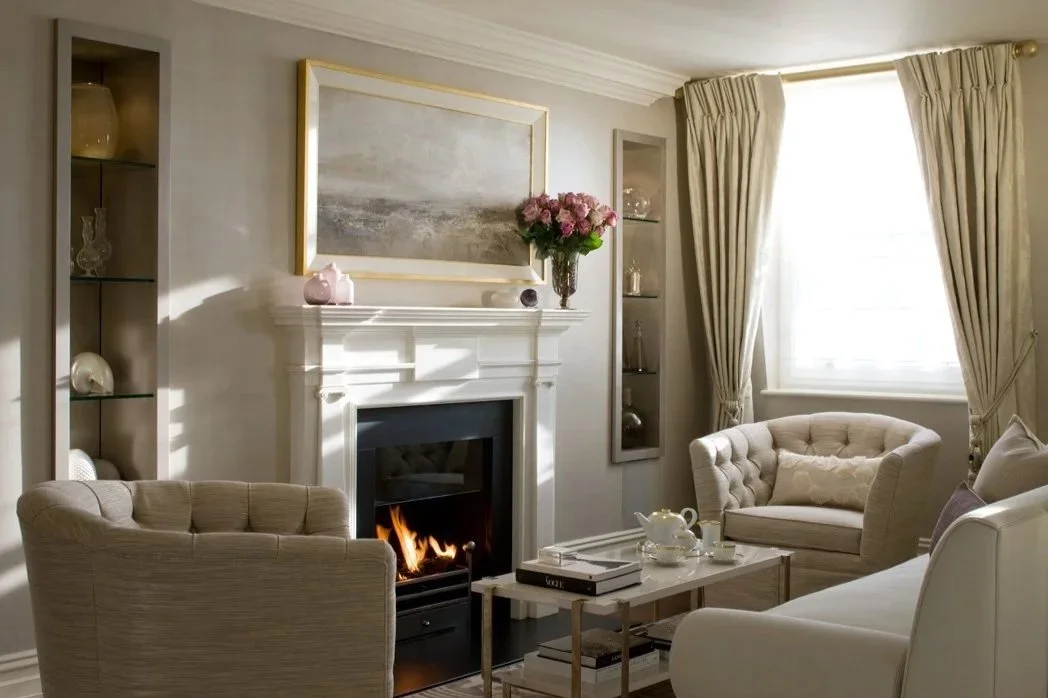
Photography: Richard Waite
Full-service interior design carries one idea from the first plan to the final placement. The exact scope changes by project, but responsibility for the relationships between decisions remains continuous.
Full-service residential interior design follows a project from its early definition through to installation. It may include spatial planning, kitchens and bathrooms, joinery, lighting, materials, furniture, window treatments, art, procurement and styling. The exact scope depends on the property and the work required.
The value of the service lies in continuity. A doorway is considered in relation to the furniture plan. The furniture plan informs lighting and electrical positions. Material selections are assessed against maintenance and the pieces that will sit beside them. The house develops as one interior rather than a series of packages assembled at different times.
Establishing the brief and scope
The first stage is to understand the property, the household and the decisions already made. A renovation, new build, apartment and furnishing commission require different forms of involvement. Some projects begin before purchase. Others arrive with an architect and builder appointed, or with construction already complete.
The scope should identify which rooms and decisions belong to the interior designer, what other consultants are involved and how approvals will work. It should also distinguish design from procurement and installation. Clarity at this stage protects the project from assumptions later.
Spatial planning and the interior architecture
Where the project involves building work, renovation and spatial design can include room relationships, circulation, kitchens, bathrooms, joinery, lighting, materials and finishes. Furniture planning begins early because it tests whether the architecture can support the way the rooms will be used.
The interior designer works alongside the architect and builder rather than replacing them. Each discipline retains its own responsibilities. The designer's role is to make the interior consequences visible while the project can still respond.
Furniture, lighting, textiles and art
Interior decoration and furnishing may be part of a construction project or a complete commission in its own right. It begins with plans rather than purchases. The scale and position of principal pieces are established before individual selections are approved.
The scheme can include contemporary and vintage furniture, bespoke pieces, decorative lighting, rugs, window treatments, upholstery, art and objects. Existing pieces are assessed for the contribution they can make. Bespoke furniture and joinery are introduced when they resolve a particular need; the number and type vary substantially from one home to another.
Design development and documentation
An approved concept has to be translated into information that other people can price, make and install. Depending on scope, this may include plans, elevations, schedules, specifications, finish samples, furniture details and setting-out information.
Documentation cannot eliminate every question, but it establishes a common reference for the client and project team. As the design develops, samples and drawings are tested against the whole rather than approved as isolated objects.
Sourcing and procurement
Once selections are approved, sourcing and project coordination turns them into orders. Quotations are reviewed and specifications confirmed before anything is ordered. Lead times need to be considered with the construction or move-in programme.
This is a different form of work from design, even though it protects the design. A beautiful selection that arrives in the wrong finish, or reaches site before it can be safely received, has failed the design however well it was chosen.
Installation and final placement
Installation and final styling is planned as a coordinated stage rather than a sequence of unrelated deliveries. Furniture and objects are received and checked before placement is directed according to the approved plans. Art and existing possessions are integrated into the rooms.
The final adjustments matter, but they should refine a composition already understood. My earlier article Composing the Furnished Room explains why the room is designed long before installation day.
What the service does not mean
Full service does not mean that the client loses involvement or that every project receives the same package. Decisions still require discussion and approval. A furnishing commission may not need spatial redesign. A new home may require extensive coordination with consultants and a long period between the first plan and the final installation.
It also does not mean the interior designer performs every specialist role. The strength of a complete service comes from holding the interior vision while working with the people responsible for architecture, construction, engineering and making. One Vision, Many Makers examines that wider collaboration.
The appropriate service is the one that covers the decisions that will shape the result. The next article considers the distinction between an interior designer and an interior decorator.
If your project needs one interior direction from early planning through furnishing and installation, contact the studio to discuss the scope.